Quick Answer: A kitchen renovation in Australia costs a median of $35,000 (HIA, 2025), ranging from about $5,000 for a cosmetic refresh to more than $100,000 for a bespoke kitchen. Most homeowners spend $20,000 to $40,000. Your final figure depends on scope, your city, and materials, and since 1 July 2024 it can no longer include an engineered stone benchtop.
Key takeaways
- The median spend is $35,000, but the realistic range runs $5,000 to $100,000+.
- Scope, not kitchen size, drives the number most.
- Cabinetry takes 30% to 40% of the budget, the single biggest line.
- Engineered stone is banned. Budget for porcelain, natural stone, or laminate.
- Kitchens recoup only 60% to 80% at resale, so avoid overcapitalising.
- Add a 10% to 20% contingency, because mission creep is the top budget-killer.
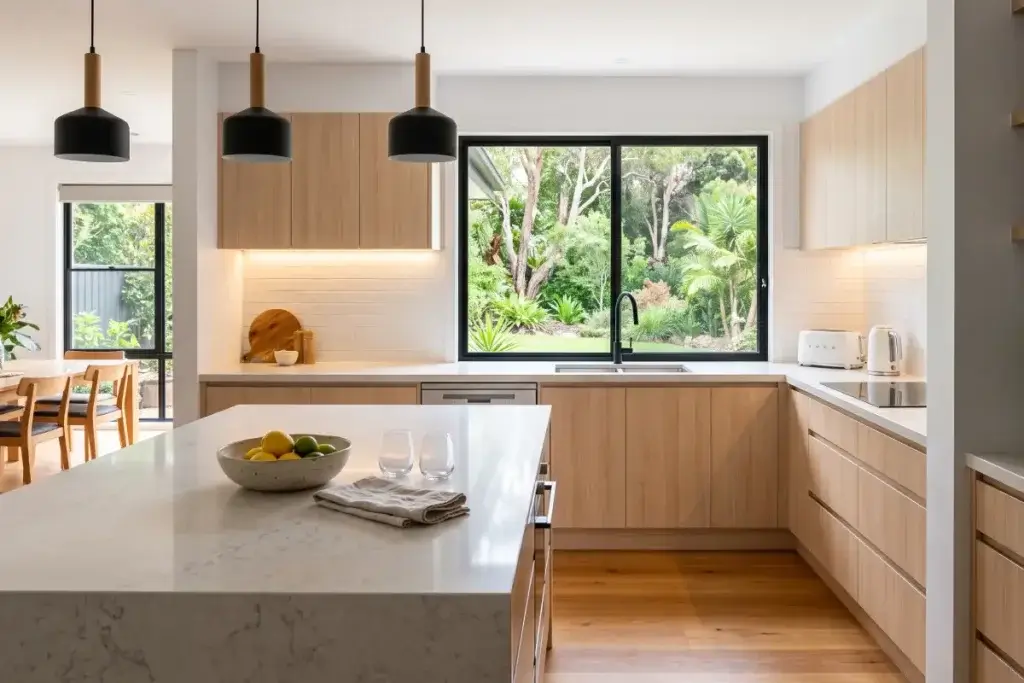
How much does a kitchen renovation cost in Australia?
Most Australians spend $20,000 to $40,000 on a full kitchen renovation, with a national median of $35,000. That median comes from the Housing Industry Association’s 2025 Kitchens and Bathrooms Report.
Look at what people spend once the job is done, not the hopeful figure they set at the start. Smith & Smith, citing Houzz.com.au data, reports that almost a quarter of homeowners spend more than $40,000.
Houzz Australia’s tracking shows the median kitchen spend climbing from $15,000 in 2019 to around $30,000 by its 2023 report. The kitchen stays the most-renovated room, with roughly a third of renovators prioritising it.
Costs by city
Sydney and Melbourne sit at the top of every benchmark. JBK Homes puts Melbourne kitchens at $28,000 to $45,000 against a national $18,000 to $35,000.
Higher labour rates, stronger demand, and stricter council requirements drive the capital-city premium. Regional areas run about 10% to 15% cheaper than their capital, per TradieVerify.
What are the four kitchen renovation scopes?
“Kitchen renovation” covers four different projects, and your scope predicts the bill far better than floor size or postcode. Sort yours into one of these before you call a single tradie.
- Cosmetic refresh: paint or reface cabinets, swap handles, replace the benchtop, splashback, and tapware. Layout untouched.
- Mid-range update: new flat-pack or semi-custom cabinetry, benchtop, appliances, and flooring in the same footprint. The $35,000 median lives here.
- Major renovation: 2-pac or custom cabinetry, stone or porcelain surfaces, new appliances, and some layout change.
- High-end or bespoke: moved walls and plumbing, integrated premium appliances, everything customised.
| Scope | Typical cost (AUD) | Rate per m² | What it includes | Layout change |
| Cosmetic refresh | $5K–$22K | ~$1,500–$2,000/m² | Paint/reface cabinets, handles, benchtop, splashback, tapware | No |
| Mid-range update | $22K–$45K | $2,500–$3,500/m² | New flat-pack/semi-custom cabinetry, benchtop, appliances, flooring | No |
| Major renovation | $45K–$75K | ~$3,500–$4,000/m² | 2-pac/custom cabinetry, stone or porcelain, appliances, some reconfiguration | Some |
| High-end / bespoke | $75K–$100K+ | $4,000+/m² | Bespoke joinery, moved walls and plumbing, integrated premium appliances | Major |
Per-metre rates from Nero Tapware; a standard Australian kitchen runs roughly 10 to 15 m².
Why can’t you use an engineered stone benchtop anymore?
Safe Work Australia banned the manufacture, supply, and installation of engineered stone from 1 July 2024, and blocked imports from 1 January 2025. Every state and territory adopted the rule.
The ban followed a silicosis crisis among the tradespeople who cut and polish the material, which releases fine crystalline silica dust. Products sold as Caesarstone, Essastone, Silestone, and Quantum Quartz can no longer be legally installed.
This reshapes your budget because engineered stone, a manufactured composite of crushed stone and resin, was the default mid-range benchtop for a decade. If a quote still lists it, that quote is out of date or non-compliant.
What to budget for a compliant benchtop
The replacements sit at different price points, and porcelain has become the main mid-to-upper choice.
- Laminate: roughly $500 to $1,800 installed. The budget option, per Asetica.
- Timber: about $600 to $900 per square metre, per Money magazine.
- Porcelain and sintered stone: around $400 to $1,050 per square metre supplied and installed, per Asetica.
- Natural stone (granite, marble): $350 to $2,000 per square metre before installation, per Money magazine.
One catch worth planning for: porcelain is not cheaper than engineered stone was, which sat near $400 to $600 per square metre, per Better Homes & Gardens. The safer surface did not come with a discount.
Where does the money actually go?
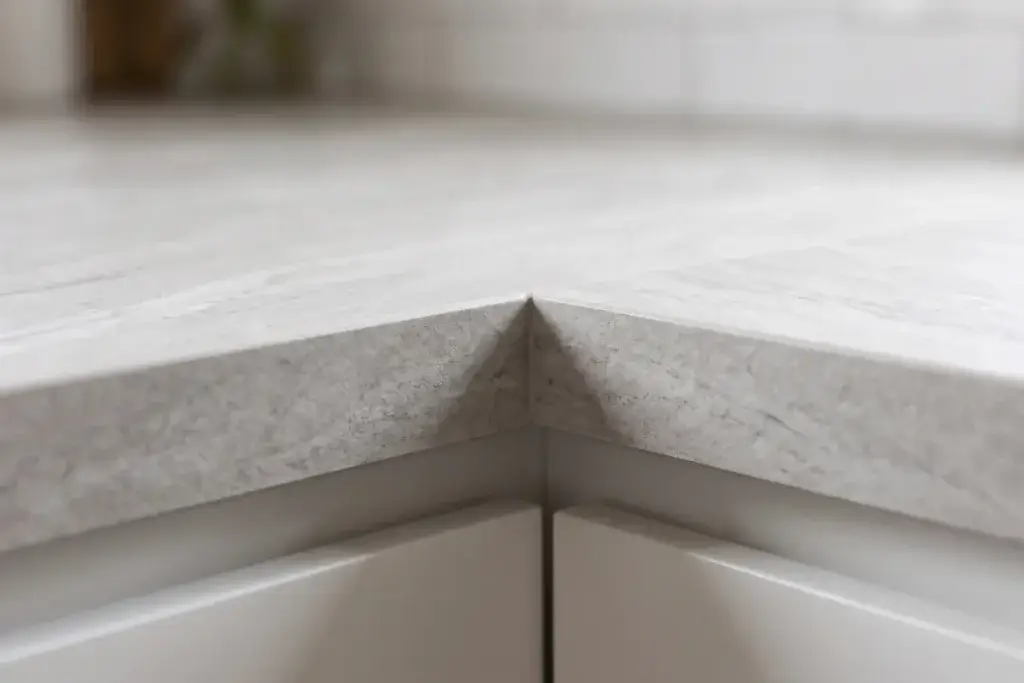
Cabinetry is the heavyweight, taking 30% to 40% of the budget, per Australian designers cited by Hacker. Once you fix your scope, the money splits in a predictable order.
Cabinetry
Your cabinet finish alone can move you a full tier. Flat-pack is cheapest, melamine sits in the middle, and 2-pac (two-pack) costs roughly 50% more than melamine, per Exclusiv Kitchens.
Labour
Kitchen tradies in Sydney and Melbourne charge $50 to $150 per hour, per Rosemount Kitchens. Regional areas run about 10% to 15% cheaper than the capitals.
The fixed extras people forget
A building permit for a standard kitchen runs $500 to $1,500, per Three Birds Renovations. Council approvals plus professional fees can add another 5% to 10% on larger jobs. Wet-area and structural work usually needs council sign-off, so confirm before demolition.
If your home is heritage-listed or sits in a conservation area, budget for an extra approval layer on top of the standard permit. Specialist firms such as Heritage Restorations and Renovations work through councils on these requirements regularly, which is worth factoring into your timeline before you start.
How much does a kitchen cost per square metre?
Budget kitchens run $1,500 to $2,000 per square metre, mid-range $2,500 to $3,500, and luxury above $4,000, per Nero Tapware. Use the rate as a quick sanity check, not a quote.
The metric quietly misleads. Cabinetry and trades are fixed costs that do not shrink with the room, so a small galley still needs a sink, a cooktop, plumbing, and the tradies to connect them.
A compact kitchen is rarely proportionally cheap. Scope drives your bill far more reliably than floor area.
Does a kitchen renovation add value at resale?
Yes, but you typically recoup only 60% to 80% of the cost, never the full amount. This is where Australian numbers diverge from American headlines that claim more than 100%.
The most-cited example: a mid-range kitchen costing about $35,000 tends to add around $20,000 to a home’s value, an estimated 57% return, per analysis from Duotax. A larger $65,000 job adding about $40,000 lands closer to 62%.
A minor, well-targeted refresh does best, at roughly 77% recoup in metro markets, per Jonathan Homes.
The real danger: overcapitalising
Spending beyond your suburb’s price ceiling strands money you never recover. A common rule of thumb caps kitchen spend at 3% to 5% of the home’s value. On a $900,000 home, that points to roughly $27,000 to $72,000, per Ross’s Discount Home Centre.
So one decision sets your budget more than any other. Renovate to sell and stay modest, neutral, and inside that ceiling. Renovate to stay for years and spend for daily liveability, with clear eyes that most of it will not come back.
How to set your kitchen renovation budget
Follow these six steps before you commit a dollar.
- Pick your scope. Decide whether you want a cosmetic refresh, a mid-range update, a major renovation, or a bespoke kitchen. This single choice frames every other number.
- Anchor to your home’s value. If you plan to sell, cap the spend at 3% to 5% of the property’s value to avoid overcapitalising.
- Get three itemised quotes. Use licensed tradies and compare line by line, so you can spot outliers and missing items.
- Confirm the benchtop is compliant. Reject any quote listing engineered stone, and price porcelain, natural stone, or laminate instead.
- Add a 10% to 20% contingency. Hold the buffer separately so a surprise behind the cabinetry does not derail the job.
- Check council requirements. Confirm whether your wet-area or structural work needs a permit before demolition day.
Why do kitchen renovations go over budget?
Australians routinely underestimate the final figure, and mission creep is the top cause. Budget Direct’s 2024 survey of more than 1,000 homeowners found unexpected costs to be the number one barrier during renovations.
Houzz research names upscale product and finish choices as the leading reason budgets blow out, cited by nearly half of those who went over. About 40% blamed products that cost more than expected.
Timing compounds it. A minor update can wrap in four weeks, but a custom kitchen takes three to six months, per Hacker. More time on site means more chances to add scope.
The fix is dull and it works: hold a 10% to 20% contingency. With ABS data showing renovation lending near three times pre-pandemic levels, that buffer matters more, not less.
So, how much?
There is no single number, and any guide that hands you one is pricing someone else’s kitchen. The real answer depends on your scope, whether you stay or sell, and the materials the law now allows.
A cosmetic refresh runs $5,000 to $22,000. A mid-range update, where most Australians and the $35,000 median sit, runs $22,000 to $45,000. A major renovation runs $45,000 to $75,000. A bespoke kitchen starts near $75,000 and climbs past $100,000.
Expect to recoup 60% to 80% at resale, never the full amount, and stay inside 3% to 5% of your home’s value if selling is the goal. Budget your benchtop around porcelain, natural stone, or laminate, then add a 10% to 20% cushion, and you land among the renovators who finish on budget instead of chasing one.