Do Nuttall Oaks Have Acorns?
You planted a Nuttall oak, or you’re about to, and the one question nobody gives a straight answer to is whether it actually produces acorns. That gap costs landowners and wildlife managers real planning time.
Yes, Nuttall oaks (Quercus texana) produce acorns, and they produce them in significant quantities once the tree reaches maturity.
This guide covers the full picture: when acorns appear, what they look like, and exactly why Nuttall oaks rank among the top acorn-producing species for wildlife habitat in the South-Central United States.
Nuttall Oak Identification
Nuttall oak belongs to the red oak group (section Lobatae), which is the same group as pin oak, shumard oak, and cherrybark oak. Knowing its group matters because all red oak group members share a defining trait: acorns require two growing seasons to mature, not one.
The leaves are deeply lobed with pointed, bristle-tipped ends, typically 4 to 8 inches long with 6 to 9 lobes. The tree is native to bottomland and floodplain environments across Louisiana, Mississippi, Arkansas, Tennessee, Oklahoma, and East Texas.
It was formerly classified as Quercus nuttallii, named for botanist Thomas Nuttall. The current accepted name is Quercus texana, though many nurseries and forestry publications still use nuttallii. Both names refer to the same tree.
Acorn Size and Appearance
Nuttall oak acorns are medium to large relative to other southern oaks. They measure roughly ¾ to 1½ inches long, with an oblong to cylindrical shape. The cup is deep, enclosing one-third to one-half of the nut, with tight, flat scales that give it a slightly shaggy appearance near the rim.
The acorn body is a pale brown to reddish-brown when fully ripe. Immature acorns in their first year appear small and greenish, which is a common source of confusion for landowners who see them on the tree in late summer and assume the tree is underperforming.
Those first-year acorns are not yet mature. They will complete development the following fall.
When Do Nuttall Oaks Produce Acorns?
Nuttall oaks begin producing acorns at roughly 25 years of age, though trees in optimal conditions with good soil moisture and full sun have been documented producing light crops earlier. Peak production typically starts around 50 years and continues for decades.
Acorn drop occurs in October and November of the second growing season. Flowers form in spring, the developing acorn overwinters as a tiny nub, then completes growth through the following summer before ripening in fall.
This means a Nuttall oak always has two acorn crops in development simultaneously: one in its first year (still green and small) and one in its second year (near ripe).
Why the 2-Year Maturation Cycle Matters
The red oak group’s biennial acorn cycle has a direct consequence: a late spring frost that kills the current-year flowers does not eliminate that fall’s acorn crop. The acorns dropping in October were pollinated the previous spring. They are already past the vulnerable flower stage.
This makes Nuttall oak more frost-resilient as a mast producer compared to white oaks (section Quercus), which ripen acorns in a single season and can lose an entire crop to a late freeze.
For wildlife managers and landowners, this is not a minor point. A white oak failure year is frequently a Nuttall oak production year, making species diversity in a planting plan critical for consistent mast.
Nuttall Oak vs. Similar Oaks: Acorn Comparison
| Oak Species | Oak Group | Acorn Maturation | Acorn Size | Acorn Drop Timing |
| Nuttall Oak (Q. texana) | Red oak | 2 years | ¾–1½ in | Oct–Nov |
| Shumard Oak (Q. shumardii) | Red oak | 2 years | ½–1¼ in | Oct–Nov |
| Water Oak (Q. nigra) | Red oak | 2 years | ½–¾ in | Oct–Dec |
| Willow Oak (Q. phellos) | Red oak | 2 years | ¼–½ in | Sep–Nov |
| Cherrybark Oak (Q. pagoda) | Red oak | 2 years | ½–¾ in | Sep–Nov |
| White Oak (Q. alba) | White oak | 1 year | ¾–1 in | Sep–Oct |
| Swamp White Oak (Q. bicolor) | White oak | 1 year | ¾–1¼ in | Sep–Oct |
Nuttall oak acorns rank among the largest in the bottomland red oak group, which directly affects which wildlife species can consume them and the caloric value per acorn.
Wildlife Value of Nuttall Oak Acorns
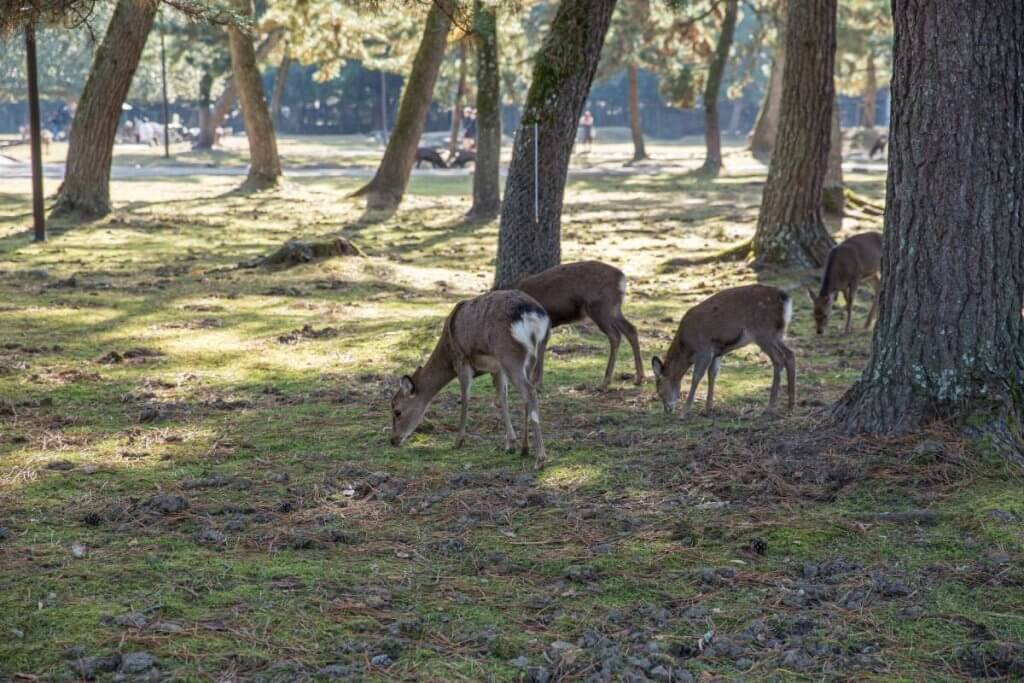
The USDA Natural Resources Conservation Service (NRCS) lists Nuttall oak as a high-value mast species for white-tailed deer, wild turkey, squirrels, and wood ducks. Its bottomland habitat preference means acorns frequently drop into shallow water or saturated soil, making them accessible to dabbling ducks during fall migration.
Wood ducks and mallards specifically target Nuttall oak acorns in flooded timber, and wildlife biologists in the Lower Mississippi Alluvial Valley have documented it as one of the primary fall food sources for migratory waterfowl in that region.
The high tannin content of red oak acorns, including Nuttall’s, means deer and other animals tend to consume white oak acorns first when both are available. Once white oak supplies are depleted, Nuttall oak acorns become a critical late-season food source through winter.
Planting Nuttall Oak for Acorn Production
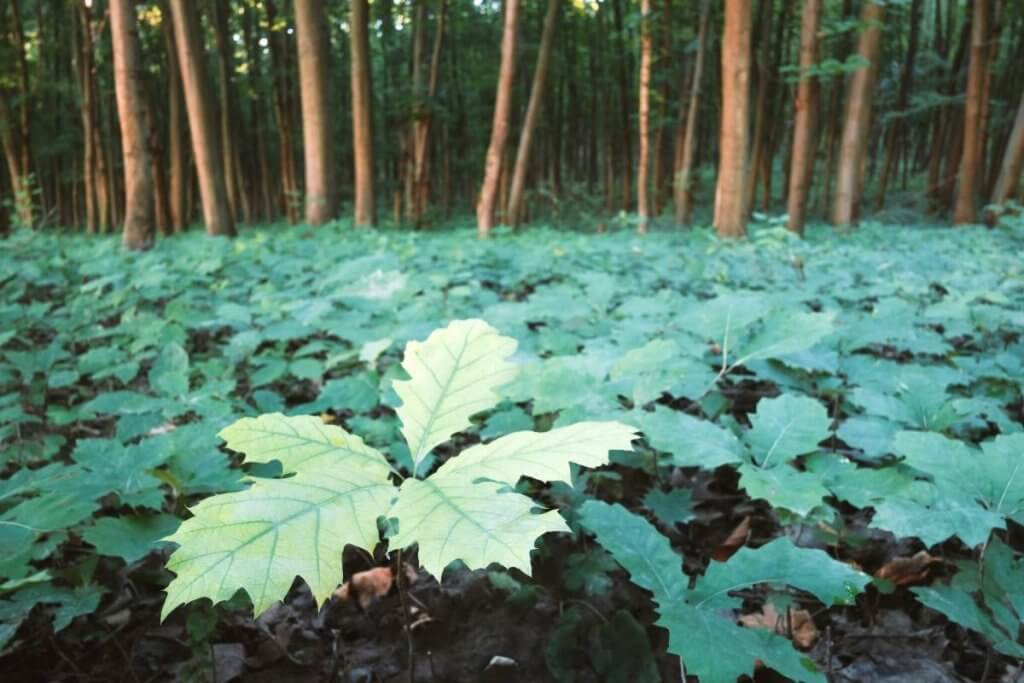
Nuttall oak is widely recognised as one of the fastest-growing oaks in its range. As noted by the University of Florida IFAS Extension, the species begins producing abundant acorn crops at a relatively young age, making it a highly practical choice for landowners looking to establish a functional mast tree within a reasonable time horizon.
Key planting requirements for optimal acorn production:
Soil:
Prefers poorly drained to moderately well-drained bottomland soils. Tolerates periodic flooding far better than upland oak species. Performs poorly in dry, sandy, or shallow soils.
Nuttall oak’s tolerance for wet, poorly drained soil sets it apart from most candidates in oak species selection for yards, where drainage conditions typically favour upland varieties like willow or shumard oak.
Sun:
Full sun is non-negotiable for high acorn yields. Trees grown in partial shade produce significantly less mast and are more susceptible to structural decline.
Canopy density directly affects acorn yield, which means long-term tree maintenance, including structural pruning to preserve full-sun crown exposure, is not optional for landowners who want consistent mast output.
Spacing:
For maximum canopy development and mast production, plant no closer than 30 feet apart. Closer spacing produces taller, narrower trees with reduced acorn output.
Pollination:
Oaks are wind-pollinated. Planting multiple trees within the same area improves pollination reliability and acorn set. A single isolated tree can still produce acorns, but clusters produce more consistently.
Key Takeaways
- Nuttall oaks produce acorns, with the first reliable crops appearing around age 25, and peak production from age 50 onward.
- As a red oak group member, Nuttall oak acorns take two full growing seasons to mature, dropping in October and November of their second year.
- Nuttall oak is a top-tier mast species for white-tailed deer, wild turkey, squirrels, and migratory waterfowl, with its late-season acorn availability filling a critical wildlife food gap after white oak supplies are gone.
Discussion question: If you’re planning a wildlife food plot or habitat restoration, how does the Nuttall oak’s bottomland requirement affect where you can realistically include it in your planting design?
FAQ
How long does it take a Nuttall oak to produce acorns? Nuttall oaks typically begin producing their first light acorn crops at around 25 years of age. Consistent, heavy mast production generally starts at 50 years and continues through the tree’s mature life. Fast early growth means Nuttall oak reaches productive size faster than most oaks, which is one reason it’s a popular choice in wildlife habitat plantings that need results within a planting rotation.
Are Nuttall oak acorns edible for humans? Technically, yes but they are high in bitter tannins, which makes them unpalatable raw. Native peoples historically leached tannins from red oak acorns through repeated soaking and rinsing in water to produce edible acorn flour. Nuttall oak acorns are not commercially harvested for food and are primarily valuable as wildlife forage rather than a human food source.
What is the difference between Nuttall oak and pin oak acorns? Both are red oak group members with a 2-year maturation cycle. Nuttall oak acorns are noticeably larger, running ¾ to 1½ inches long, with a deep cup covering a significant portion of the nut. Pin oak (Quercus palustris) acorns are much smaller, typically ½ inch or less, nearly round, with a shallow saucer-like cup. The size difference is significant for wildlife: species like wood ducks can handle Nuttall acorns whole, while pin oak’s smaller acorn size broadens the range of birds that can consume it.
Do Nuttall oaks produce acorns every year? Nuttall oaks produce acorns annually once they reach maturity, since the two-year cycle means there are always second-year acorns completing development and dropping each fall. However, crop size varies year to year based on weather conditions during pollination, late frost events affecting flowers, and natural mast cycle fluctuations. Like all oaks, Nuttall can have boom years with extremely heavy crops followed by lighter production years. This boom-bust pattern is normal and not a sign of tree stress.