Planting an oak tree isn’t just landscaping; it is an act of optimism. You are planting a legacy that will likely outlive us all.
But here is the problem: With over 600 species of oak (Quercus) worldwide, choosing the wrong one can be a disaster. The wrong oak can crack your foundation with aggressive roots, drop thousands of messy acorns on your driveway, or succumb to disease before it ever reaches maturity.
You don’t want to wait 20 years to realize you made a mistake.
The solution? You need to match the tree to your specific lifestyle and landscape conditions. Whether you need rapid shade, a compact tree for a small suburban lot, or a majestic giant for a country estate, this guide breaks down the best types of oak trees to ensure your yard thrives for generations.
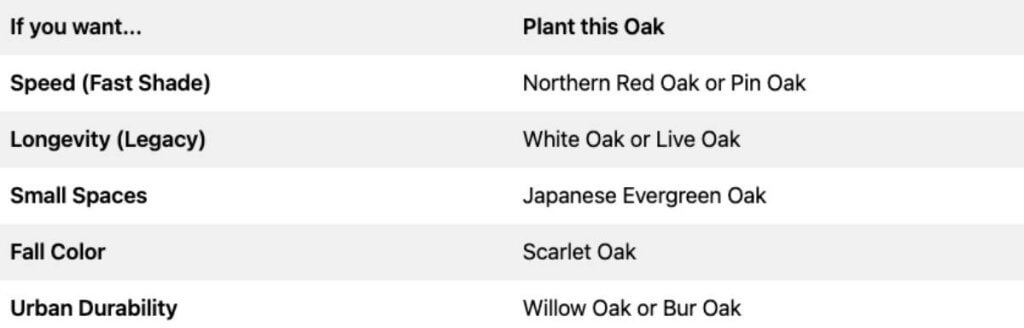
The Best Oak for Your Goal
Red Oak vs. White Oak: The Critical Difference
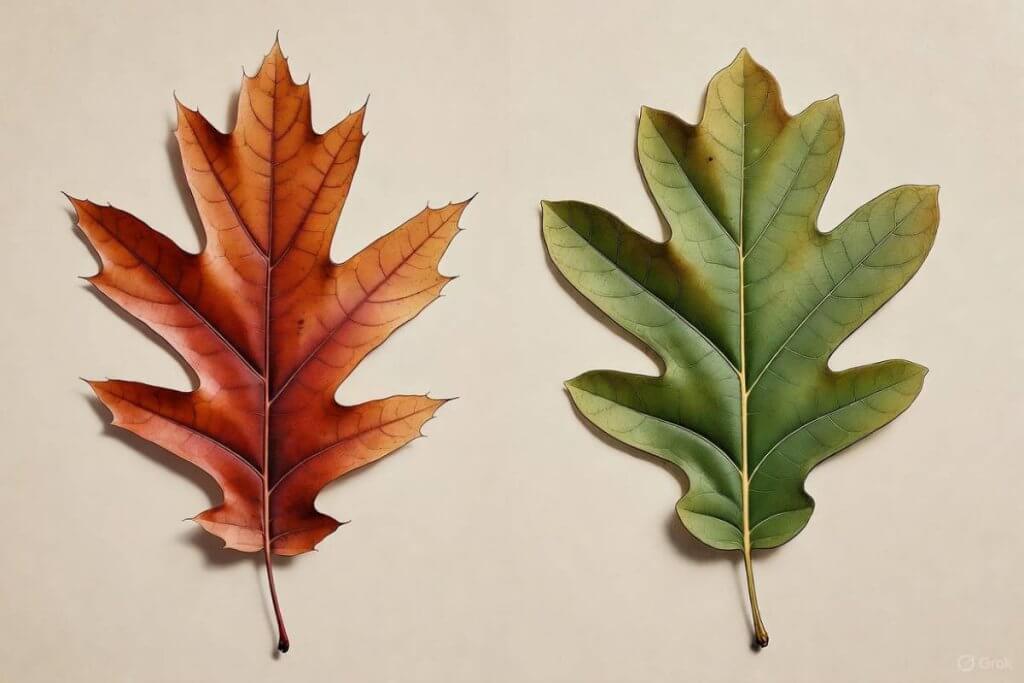
Before you pick a species, you need to understand the two main “families” of oaks. This dictates everything from disease resistance to leaf shape.
- The Red Oak Group: These trees generally grow faster and have leaves with pointed, bristle-tipped lobes. They transplant easily but are more susceptible to Oak Wilt. Their acorns take two years to mature and are bitter (wildlife eats them last).
- The White Oak Group: These are the slow-burners. They have leaves with rounded lobes (no bristles). They are harder to transplant due to deep taproots but are generally longer-lived and more resistant to rot. Their acorns mature in one year and are sweeter (wildlife loves them).
Expert Tip: If you live in an area prone to Oak Wilt, stick to the White Oak group, as they have significantly higher resistance.
The Speed Demons: Fastest Growing Oaks
If you don’t have 50 years to wait for shade, these are your best options.
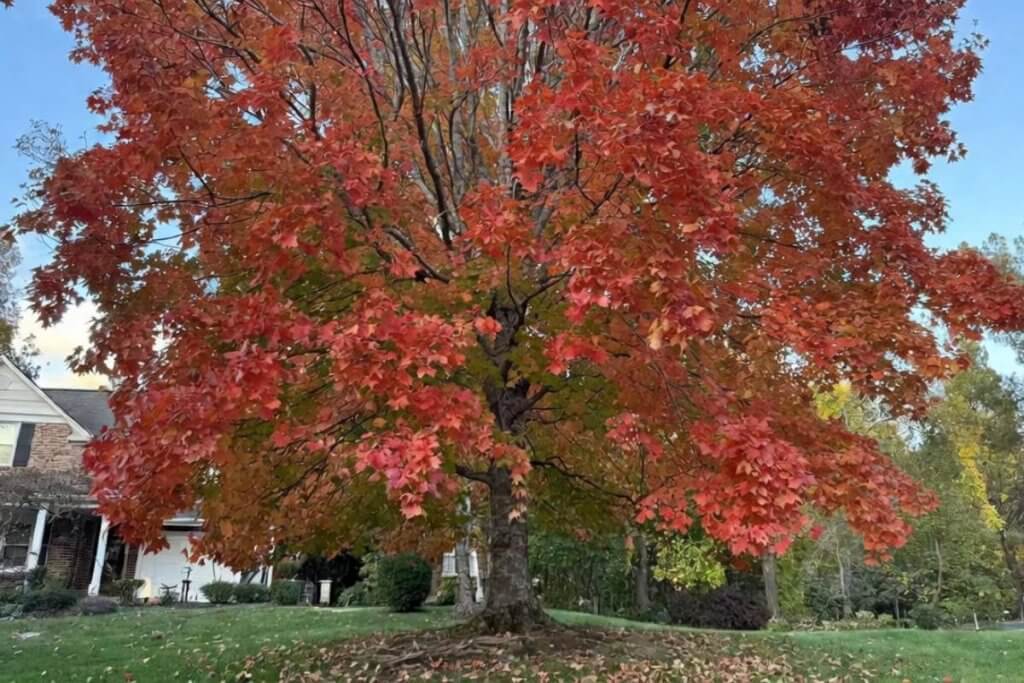
1. Northern Red Oak (Quercus rubra)
This is the “gold standard” for suburban yards. It is durable, beautiful, and surprisingly fast for an oak.
- Best For: Impatient homeowners wanting shade and fall color.
- Growth Rate: Fast (up to 2 feet per year).
- The Vibe: The leaves turn a brilliant brick-red in autumn. It has a classic symmetrical shape that looks great in a front yard.
2. Pin Oak (Quercus palustris)
The Pin Oak is distinctive because of its branching habit: upper branches point up, middle branches are horizontal, and lower branches droop down.
- Best For: Wet soil and large lawns. If you are planting this in a grassy area, keep in mind that its dense shade may require you to adjust your turf maintenance routine, such as restoring and caring for a vibrant buffalo lawn that can struggle without full sun.
- Growth Rate: Very Fast (2.5+ feet per year).
- Warning: The lower branches droop significantly. Do not plant this near sidewalks or driveways unless you plan to prune heavily, or it will scratch cars and pedestrians.
3. Nutall Oak (Quercus texana)
Often called the “Red Oak of the South,” this tree is incredibly underutilized. It keeps its leaves late into winter and tolerates poor drainage better than almost any other oak.
- Best For: Southern climates and heavy clay soil.
- Growth Rate: Fast.
The Gentle Giants: Best for Shade & Legacy
These trees are an investment. They grow massive and provide the iconic “canopy” look associated with historic neighborhoods.
4. White Oak (Quercus alba)
This is the king of the forest. If you have the space and the patience, nothing beats a White Oak. They can live for centuries, and their branches spread wide, often becoming wider than the tree is tall.
- Best For: Large estates and long-term property value.
- Growth Rate: Slow to Medium.
- Key Feature: The bark is light gray and scaly. As it ages, it looks incredibly noble.
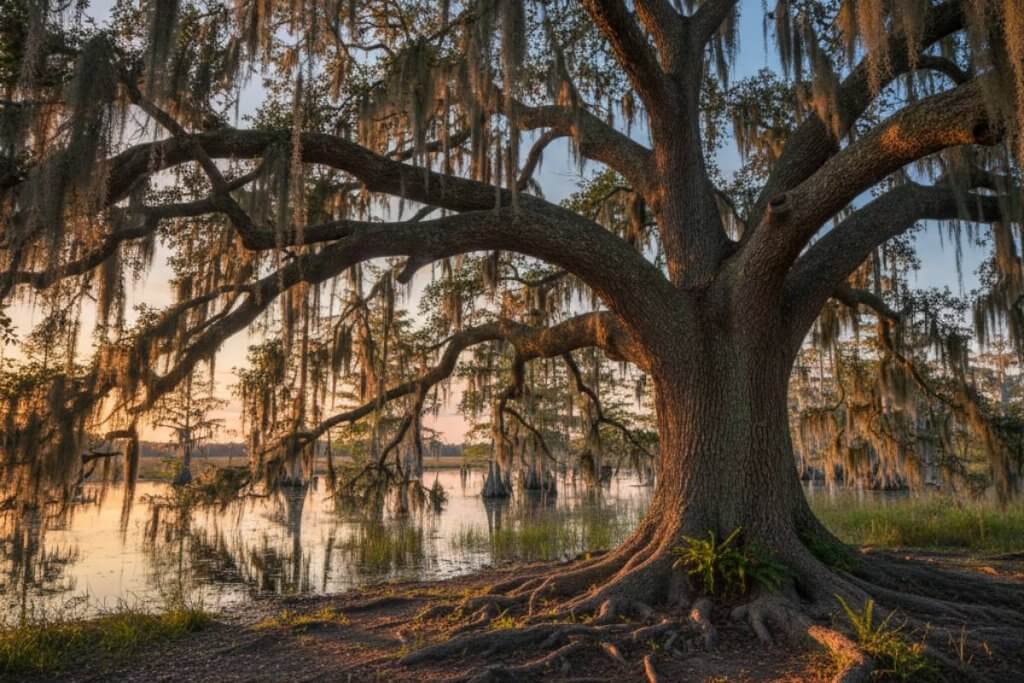
5. Southern Live Oak (Quercus virginiana)
The icon of the American South. Unlike other oaks, this is evergreen (it swaps leaves rapidly in spring, never going fully bare). It creates that sprawling, moss-draped look found in Savannah and New Orleans.
- Best For: Warm climates (Zones 8-10) and sandy soils.
- Growth Rate: Medium.
- Warning: These trees get wide. Do not plant within 20 feet of a house; the heavy horizontal limbs can pose a risk during hurricanes if not properly pruned. Additionally, maintaining this buffer prevents the canopy from trapping excessive moisture against your siding, which can force you to deal with unsightly mould vs. mildew issues on your home’s exterior.
6. Bur Oak (Quercus macrocarpa)
A rugged survivor. The Bur Oak has thick, corky bark that makes it fire-resistant and incredibly tough. It produces the largest acorns of any North American oak (some the size of golf balls).
- Best For: The Midwest, urban pollution, and drought tolerance.
- Growth Rate: Slow.
- The “Mess” Factor: Because of the massive acorns, keep this away from patios or decks where walking could be hazardous.
Small but Mighty: Best Oaks for Compact Yards
Love oaks but live on a 1/4 acre lot? You don’t have to settle for a dogwood.
7. Japanese Evergreen Oak (Quercus acuta)
This doesn’t look like your typical oak. It has glossy, dark green leaves that resemble a ficus more than an oak. It grows upright and dense.
- Best For: Privacy screens and windbreaks in small yards.
- Size: rarely exceeds 20-30 feet in cultivation.
- Benefit: It keeps its leaves year-round, making it excellent for blocking the view of neighbors.
8. Blackjack Oak (Quercus marilandica)
A smaller, scrubby oak that has immense character. It rarely grows straight, developing a twisted, picturesque form that looks great in rock gardens or native landscapes.
- Best For: Poor, rocky soil where nothing else grows.
- Size: 20-40 feet.
Pro-Tips: How to Plant and Care for Oaks
Even the toughest tree needs a good start. Here is how to avoid the common killers of oak trees.
- Mind the Taproot: Most oaks (especially White Oaks) send down a massive taproot immediately. This makes them drought-tolerant but hard to move. Pick your spot carefully; you can’t easily transplant it later.
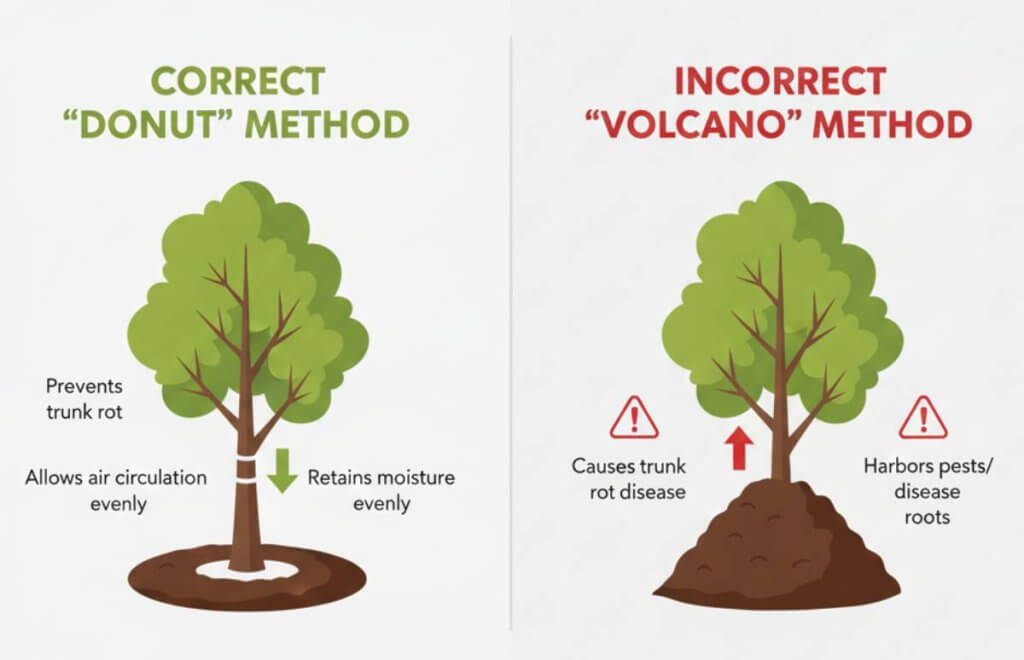
- The “Mulch Volcano” Mistake: Never pile mulch up against the trunk of the tree. This rots the bark. Keep mulch 3 inches away from the trunk, creating a donut shape, not a volcano. Once you have mulched correctly, consider amending the surrounding dirt with organic matter; understanding the best materials for composting can help you create a nutrient-rich environment that encourages faster root establishment.
- Pruning Timing is Critical: To prevent Oak Wilt (a fungal disease that kills trees), never prune oaks between April and July. The open wounds attract beetles that carry the fungus. This is why seasoned experts, such as the team at Wiktora Bros Tree Works, strictly advise scheduling major maintenance during the dormant winter months.
Final Thoughts: Which Oak Will You Choose?
Choosing the right oak is about balancing your current needs with the future of your landscape.
- Need instant gratification? Go with the Northern Red Oak.
- Building a legacy for your grandchildren? Plant a White Oak.
- Need privacy in a tight spot? The Japanese Evergreen Oak is your winner.
I’d love to hear from you: Do you have a favorite oak species, or are you struggling with a specific spot in your yard? Drop a comment below and let’s figure out the perfect tree for your home.
FAQs
Do oak trees damage foundations? They can. Oaks have vigorous root systems that seek moisture. While they rarely “attack” a foundation, they will exploit existing cracks or dry out the soil beneath a foundation, causing settling. Rule of thumb: Plant large oaks at least 15-20 feet away from your home.
Which oak tree is the least messy? If you want to avoid acorns, it is difficult as all oaks produce them. However, the Willow Oak has very small leaves and small acorns that are easier to mulch over than the massive debris of a Bur Oak or Chestnut Oak.
Can I grow an oak tree from an acorn? Absolutely. It is the best way to ensure a good root system. Collect acorns in the fall. If it’s a White Oak, plant it immediately (it germinates instantly). If it’s a Red Oak, it needs “stratification” (winter cold) before it will grow in the spring.