Choosing a large shade tree is a long-term commitment, and the wrong pick costs you decades of regret. Most homeowners plant trees that buckle sidewalks, drop invasive acorns, or fail in the first drought.
The Shumard oak (Quercus shumardii) solves most of those problems in one species, but it is not perfect.
This guide covers every practical use, every honest drawback, and exactly what to expect when fall hits.
What Is the Shumard Oak?
The Shumard oak is a large deciduous tree native to the eastern and south-central United States, named after Texas State Geologist Benjamin Franklin Shumard.
The Shumard oak is one of several types of oak trees suited to residential yards, but its size demands more long-term planning than most homeowners anticipate. It is one of the largest southern red oaks and grows scattered with other hardwoods on moist, well-drained soils associated with large and small streams.
Mature specimens typically reach 25 to 35 metres (82 to 115 feet) in height, with trunk diameters of 60 to 100 centimetres (24 to 39 inches) and crown widths of 12 to 18 metres (39 to 59 feet). Record trees have exceeded 60 metres (200 feet).
Hardiness ranges from USDA Zone 5b through Zone 9, covering most of the contiguous U.S. south of the Great Lakes. That range makes it one of the most widely adaptable native oaks on the market.
What Is the Shumard Oak Used For?
Landscaping and Shade
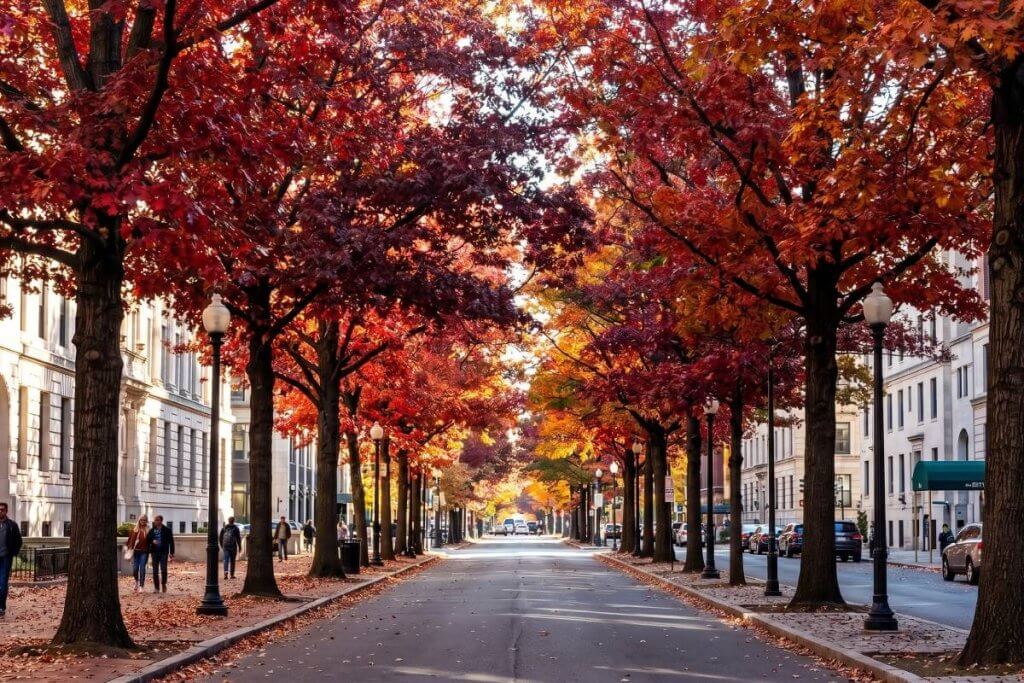
The Shumard oak’s primary commercial use is as a large-canopy shade tree for parks, streetscapes, and residential lots. It is a moderately fast-growing species with a long life span, making it an ideal urban species.
Its canopy spreads 39 to 59 feet at maturity, blocking summer heat load effectively from south- and west-facing walls. Municipalities across the South and Midwest plant it as a street tree specifically because it tolerates compacted soil and periodic flooding better than many competitors.
Timber and Lumber
The wood is superior to most red oaks, but it is mixed indiscriminately with other red oak lumber and used for the same products. That means when you buy “red oak” flooring, cabinets, or furniture, Shumard oak may already be in your home.
The wood is heavy, hard, and ring-porous with coarse grain. It machines and stains well, making it a reliable choice for hardwood flooring, veneer, railroad ties, and furniture frames. Sawyers rarely market it separately because it commands identical prices to other red oaks.
Wildlife Habitat
The tree produces acorns every 2 to 4 years that wildlife use as food. White-tailed deer, wild turkeys, wood ducks, and blue jays all target Shumard acorns, which are among the largest in the red oak group at up to 3 cm (1 inch) in diameter.
The Shumard oak also serves as a larval host plant for multiple butterfly and moth species. Mature trees develop deeply furrowed bark that provides nesting and foraging habitat for cavity-nesting birds.
Carbon Sequestration
Based on USDA Forest Service models, a single Shumard oak will absorb approximately 2,815 lbs. of carbon over 20 years, offsetting up to 11,390 car miles worth of carbon dioxide.
That figure puts Shumard oak in the top tier of urban carbon sinks among deciduous species.
Shumard Oak Fall Color
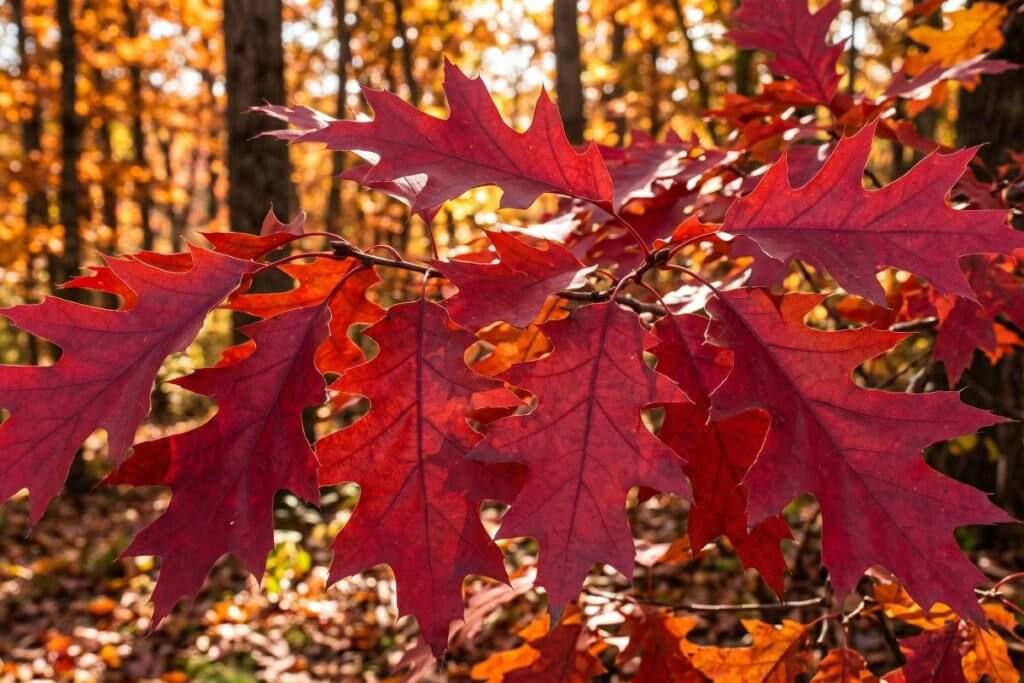
The Shumard oak is widely planted for fall foliage, and it delivers. Leaves turn brilliant red to reddish orange in fall. The display typically begins in late October and peaks in early to mid-November across most of its range.
Color intensity varies with site conditions. Trees in full sun with well-drained, slightly acidic soil produce the most saturated reds. Trees stressed by alkaline soil or standing water tend toward muted russet or brown tones before dropping.
Fall color ranges from red or reddish purple to brown, and sometimes yellow, depending on the individual tree and growing conditions. Do not expect every specimen to match a catalog photo. Genetics and site play equal roles in the outcome.
The foliage holds longer than many oaks, typically 3 to 4 weeks on the tree after peak color. Leaves drop relatively cleanly and decompose quickly compared to pin oak, which tends to hold dead brown leaves through winter.
Shumard Oak Pros
Adaptability to Urban Stress
Shumard oak tolerates compacted soil, heat islands, and periodic flooding that would kill less resilient oaks. It can survive where soils experience flooding for up to six weeks per year.That tolerance makes it viable in low-lying urban sites where other species fail.
Native Ecosystem Value
As a native species across 28+ U.S. states, it supports local food webs without becoming invasive. Planting it restores ecological function that non-native ornamental trees cannot replicate.
Long Lifespan with Meaningful Size
Some Shumard red oaks have been dated at approximately 480 years old. You are planting infrastructure, not decoration. The canopy provides measurable energy savings for structures within its shade zone for generations.
Faster Growth Than Comparable Oaks
Most large oaks grow 12 to 18 inches per year. Shumard oak averages 18 to 24 inches annually under good conditions, getting you to meaningful shade within a decade of planting.
Superior Timber Quality
Its wood density and workability exceed most red oak relatives, giving it commercial value if a tree ever needs removal.
Shumard Oak Cons
Acorn Volume and Mess
A mature Shumard oak drops thousands of large, hard acorns in fall. On patios, sidewalks, and driveways, those acorns become a slip hazard and a cleanup burden every year. Acorn production occurs every 2 to 4 years in heavy cycles, meaning mast years will overwhelm any collection effort. Nuttall oak acorn production follows a similar biennial mast cycle, making it worth comparing directly if you are choosing between the two species for a low-maintenance yard.
Susceptibility to Oak Wilt
Like all members of the red oak group, Shumard oak is highly susceptible to oak wilt (Bretziella fagacearum). Infection through wounds or insect vectors can kill a tree within weeks during the growing season. Never prune between February and June in endemic areas.
Soil Specificity
It requires well-drained, moist, fertile, humus-rich, slightly acidic soil. On heavy clay, alkaline, or chronically dry sites without supplemental irrigation, establishment fails or growth stalls. It is not a drought-tolerant oak once you step outside its native moisture regime.
Size Demands Long-Term Planning
A canopy spreading 40 to 60 feet cannot coexist with overhead utilities, small lots, or proximity to building foundations. Buyers consistently underestimate the final footprint and end up removing trees at high cost.
Slow Acorn Maturation
Oak nuts develop very slowly and may take more than two years to fully mature.For wildlife gardeners expecting a quick wildlife draw, this lag can be frustrating in the early years.
Shumard Oak vs. Other Red Oaks
| Feature | Shumard Oak | Pin Oak (Q. palustris) | Scarlet Oak (Q. coccinea) |
| Mature Height | 80–115 ft | 60–70 ft | 70–75 ft |
| Growth Rate | 18–24 in/yr | 24–36 in/yr | 18–24 in/yr |
| Fall Color | Red to reddish orange | Bright red to bronze | Scarlet to bright red |
| Drought Tolerance | Moderate | Low | Moderate to high |
| Flood Tolerance | High (6 wks) | High | Low |
| Urban Adaptability | High | Moderate | Moderate |
| Oak Wilt Risk | High | High | High |
| Winter Leaf Drop | Full drop | Marcescent (holds leaves) | Full drop |
| USDA Zones | 5b–9 | 4–8 | 4–9 |
| Acorn Size | Large (up to 1 in) | Small (3/8 in) | Medium (1/2 in) |
Pin oak is faster and cheaper but holds dead brown leaves all winter, a major aesthetic drawback. Scarlet oak offers superior drought tolerance but fails in wet sites where Shumard thrives. For most Southern and Midwestern landscapes with average to moist soil, Shumard oak wins on balance.
Growing Conditions and Care
Site Selection
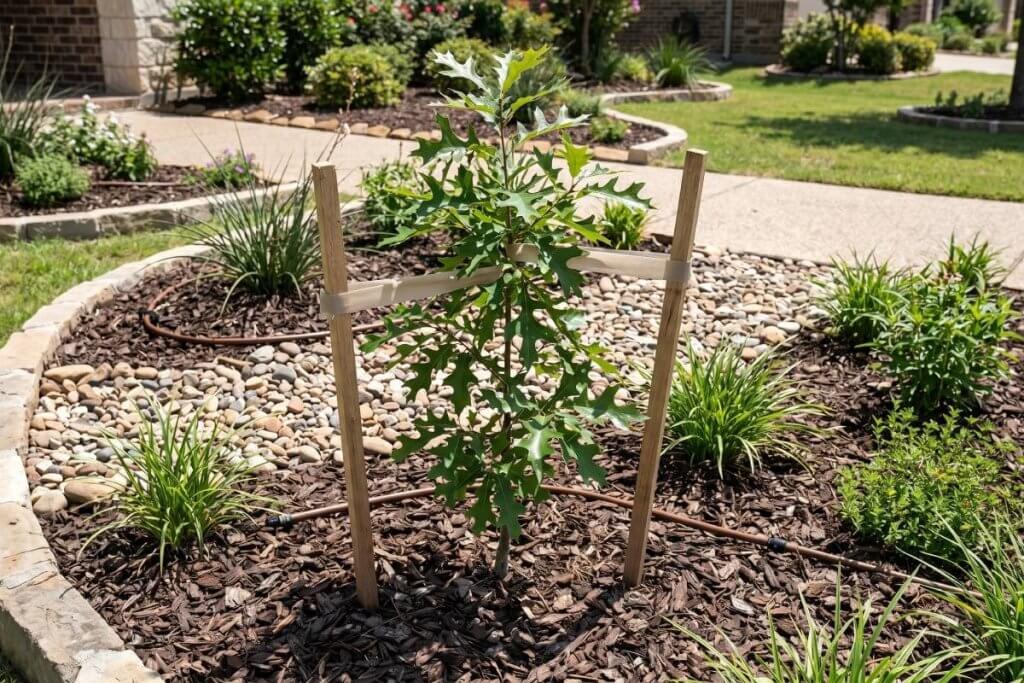
Plant in full sun with at least 6 hours of direct light daily. Canopy size at maturity requires a minimum 50-foot clearance from structures, utilities, and paved surfaces. Soil pH should sit between 5.5 and 6.5.
Planting
Dig a hole two to three times the width of the root ball but no deeper. Set the root flare at or slightly above grade. Backfill with native soil only; amended backfill creates a “container effect” that discourages roots from extending into surrounding soil.
Watering
Water deeply once per week for the first two growing seasons. Once established, Shumard oak needs no supplemental irrigation in average-rainfall zones above 30 inches annually. Overwatering on heavy clay accelerates root rot.
Pruning
Prune only during dormancy (July through January in most ranges). Seal all wounds immediately with a wound dressing in oak wilt-endemic states. Applying sound tree maintenance practices during the first five years, particularly structural pruning to establish a single dominant leader, determines how the Shumard oak performs for the next century. Remove crossing branches and co-dominant leaders in the first 10 years to establish a single, dominant central leader.
Fertilization
Established trees in native soil need no fertilization. Young trees in nutrient-poor urban soils benefit from a slow-release granular fertilizer applied at the drip line in early spring, not against the trunk.
Conclusion
The Shumard oak earns its reputation as one of the best large native shade trees for Southern and Midwestern landscapes. Its combination of fast growth, high flood tolerance, brilliant fall color, superior timber quality, and genuine wildlife value gives it a clear edge over most competing red oak species. The trade-offs are real: acorn mess, oak wilt vulnerability, and a size that demands honest site planning. Manage those factors correctly and you are planting a tree that will outlast your house.
FAQ
How fast does a Shumard oak grow per year? Shumard oak grows 18 to 24 inches per year under ideal conditions with full sun and adequate moisture. That rate places it among the faster-growing large oaks available to homeowners. Growth slows on dry, compacted, or alkaline sites. Expect 10 to 15 years to meaningful shade from a nursery-sized transplant.
Is Shumard oak good for small yards? No. A mature Shumard oak reaches 80 to 115 feet tall with a canopy spread of 40 to 60 feet. Planting one in a small yard guarantees eventual conflict with utilities, foundations, or neighboring properties. On lots under a quarter-acre, choose a smaller native oak like the chinkapin oak (Q. muehlenbergii) or the willow oak (Q. phellos) instead.
When does Shumard oak change color in fall? Color change begins in mid to late October across most of the tree’s range and peaks in early to mid-November. The display lasts roughly 3 to 4 weeks before leaf drop. Trees in full sun on well-drained, slightly acidic soil show the most vivid red and reddish-orange tones. Shaded or stressed trees trend toward brown.
Is Shumard oak the same as red oak? Shumard oak belongs to the red oak group (Quercus section Lobatae) and shares most characteristics with other red oaks, but it is a distinct species (Quercus shumardii). It differs from the more commonly referenced Northern red oak (Q. rubra) in its larger acorn size, higher flood tolerance, and more southerly native range. In the lumber trade, both species are sold interchangeably as “red oak.”