Most oaks are out of the question for a small yard. A typical red oak spreads 45 to 60 feet wide and demolishes driveways, fences, and sewer lines without apology.
You want shade, privacy, and wildlife value, but your lot gives you 10 feet to work with. The Kindred Spirit Oak was bred specifically for this problem: it delivers genuine oak character in a column roughly 10 to 15 feet wide.
Before you order one, though, there are real tradeoffs worth knowing.
What Is the Kindred Spirit Oak?
The Kindred Spirit Oak is a hybrid deciduous tree with the scientific name Quercus x warei ‘Nadler’. Its parentage is a cross between a columnar English Oak (Quercus robur ‘Fastigiata’) and a Swamp White Oak (Q. bicolor).
Its cold hardiness, branch strength, and ability to tolerate both drought and saturated soil all trace back to the Swamp White Oak, which contributes to the resilience side of this hybrid’s genetic profile. In 1974, nurseryman Earl Cully planted a thousand acorns from this cross at his Jacksonville, Illinois property. Only a handful met his criteria. Kindred Spirit was among the first he released commercially. The original specimen, planted over 50 years ago, still stands on that property and validates everything claimed about this cultivar’s longevity.
In 2019, it won the Theodore Klein Plant Award, one of the most recognized honors in the North American nursery industry for outstanding ornamental trees.
Growth Specs: What You’re Actually Getting
| Trait | Detail |
| Mature Height | 40–50 feet |
| Mature Spread | 10–15 feet |
| Growth Rate (young) | 12–18 inches per year |
| Hardiness Zones | 4–8 |
| Sun Requirement | Full sun |
| Soil Adaptability | Clay, loam, sand; wet or dry |
| Fall Color | Red-orange to golden brown |
| Acorn Production | Yes, medium-sized |
| Powdery Mildew Resistance | High |
| Salt/Urban Pollution Tolerance | High |
The outline ratio is roughly 4:1 to 5:1, meaning this tree is always dramatically taller than it is wide.
Pros of the Kindred Spirit Oak
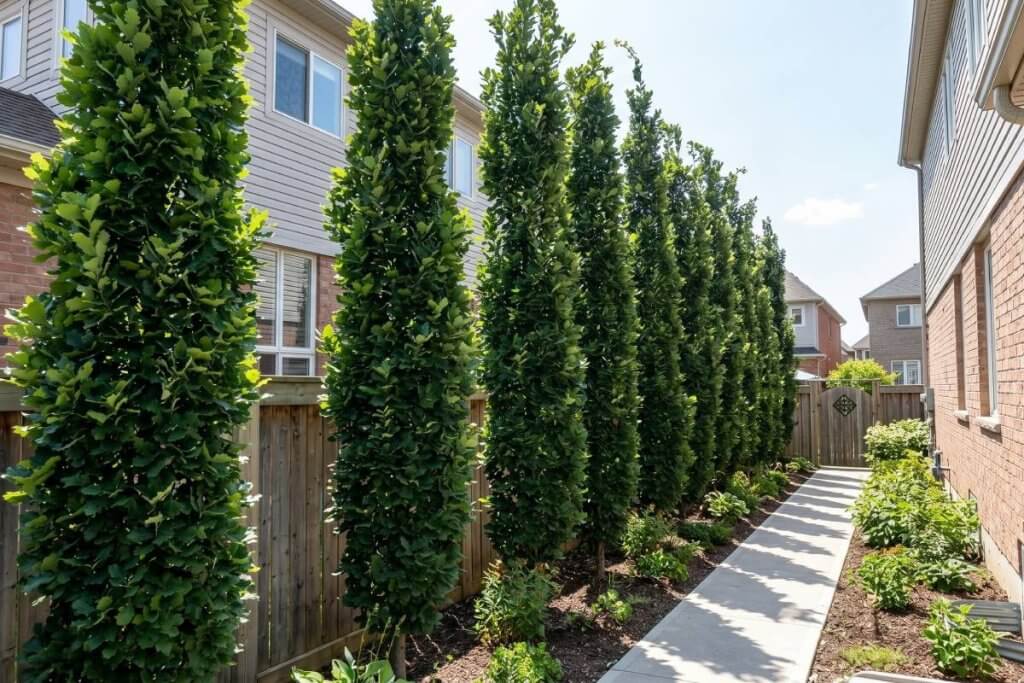
1. It Fits Where No Standard Oak Can
A 10-to-15-foot spread puts this tree in tight urban corridors, narrow side yards, and planting strips where other oaks would cause structural damage within a decade. It grows up, not out, making it legitimately useful where space is the binding constraint.
2. Genuine Oak Characteristics in a Compact Form
This is not a compromise shrub masquerading as a tree. It produces real oak leaves, real acorns, and develops the structural silhouette of a mature oak. The leaves are dark green on top with a silver underside that catches the wind and creates visible movement.
3. Inherited Resilience from Both Parents
From the Swamp White Oak side, it gained cold hardiness, heat tolerance, the ability to handle constantly damp or dry soil, and branches that resist wind and ice damage. From the English Oak, it got the tight columnar habit. This genetic combination makes it one of the more structurally durable columnar trees available.
4. High Mildew and Pollution Resistance
Standard columnar English Oaks are notorious for powdery mildew. The Kindred Spirit inherited the Swamp White Oak’s resistance, which eliminates one of the most common complaints about English Oak cultivars in humid climates. It also tolerates salt spray and urban air pollution, making it a real option for streetscapes.
5. Fast Establishment Growth
Young trees push 12 to 18 inches per year under average to good conditions. That growth rate is fast for any oak and delivers meaningful height within three to five years of planting.
6. Exceptional Wildlife Value
Research from University of Delaware entomologist Dr Doug Tallamy shows that oak trees support more than 950 species of caterpillars, which are a critical food source for birds. No ornamental substitute, native or non-native, comes close. By planting a Kindred Spirit Oak, you introduce that ecological productivity into a footprint that urban and suburban lots can actually accommodate.
7. Extended Privacy Season
This tree holds its leaves significantly later into fall than most deciduous trees, extending the visual screen on your property well past the point when surrounding trees have dropped. This is a meaningful practical advantage for anyone using it as a privacy hedge in a row planting.
Cons of the Kindred Spirit Oak

1. “Small Space” Does Not Mean Short
This tree reaches 40 to 50 feet tall. That qualifies it as a large tree. It will eventually dwarf a single-story home and can interfere with overhead utility lines. The small-space advantage is entirely about width, not height. If your overhead clearance is limited, this tree requires the same caution as any mature large tree.
2. Full Sun Requirement Is Non-Negotiable
This oak will not thrive in partial shade. A north-facing narrow side yard between two buildings is exactly the kind of spot where buyers are tempted to plant it for privacy. If direct sun is blocked for more than a few hours per day, growth stalls and the form opens up.
3. Pruning Is Restricted to a Specific Window
Avoid pruning between April and October. During that period, small sap beetles can transmit oak wilt, a fungal disease that can kill oaks. Pruning cuts made in spring or summer create fresh wound sites that attract these beetles. All structural pruning must happen in late fall or winter, which requires planning around a strict seasonal calendar.
4. Acorn Mess Is Real
Medium-sized acorns drop across a full season. In a tight planting strip next to a driveway or walkway, acorns become a slip hazard and a cleanup obligation. If you plan a row planting of several trees, the cumulative acorn drop is substantial.
5. Needs Supplemental Water for the First Two Seasons
Despite long-term drought tolerance, newly planted trees require regular watering during their first two growing seasons. In periods of drought, skipping irrigation during establishment can cause significant dieback or kill the tree entirely.
6. Availability and Cost
Kindred Spirit Oak is not a commodity nursery tree. Many garden centers do not stock it, and B&B (balled and burlapped) specimens at a plantable size carry a premium price. Sourcing may require a specialty nursery order, which adds lead time.
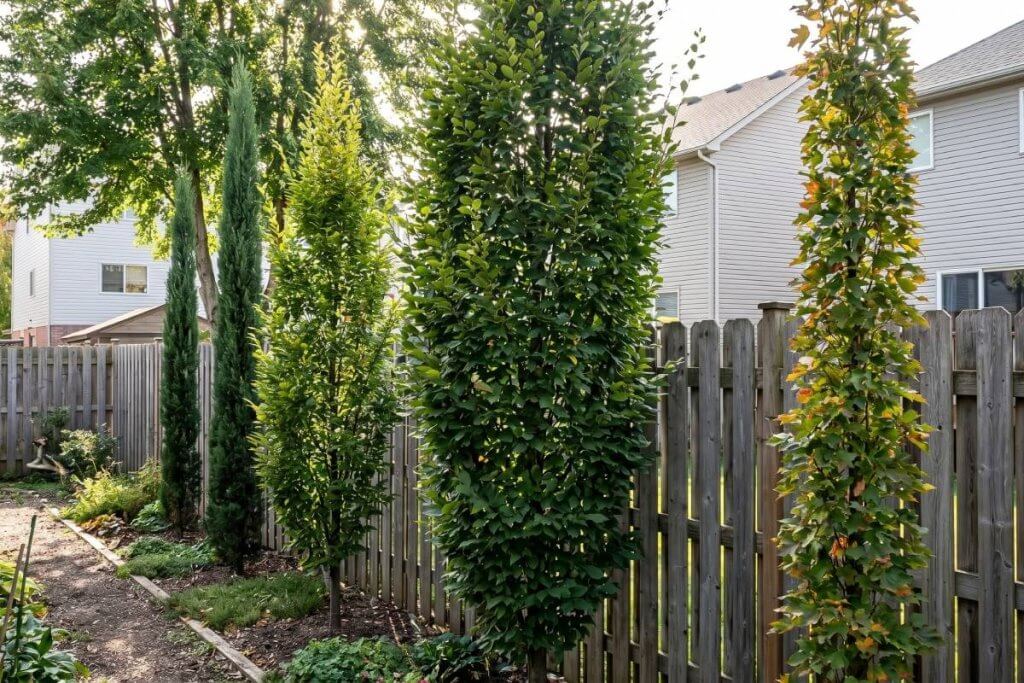
Kindred Spirit Oak vs. Other Narrow Tree
| Tree | Height | Spread | Zones | Deciduous | Wildlife Value | Mildew Resistance |
| Kindred Spirit Oak | 40–50 ft | 10–15 ft | 4–8 | Yes | Very High | High |
| Columnar English Oak (Q. robur ‘Fastigiata’) | 40–60 ft | 10–15 ft | 4–8 | Yes | High | Low |
| Crimson Sentry Norway Maple | 25–30 ft | 12–15 ft | 4–7 | Yes | Very Low | Moderate |
| Sky Pencil Holly | 6–10 ft | 2–3 ft | 6–9 | No | Low | Low |
| Princeton Sentry Ginkgo | 40–50 ft | 10–15 ft | 3–8 | Yes | Very Low | N/A |
The Kindred Spirit Oak competes directly with the columnar English Oak on dimensions but eliminates the mildew liability. Norway Maple is shorter, but an invasive species in many U.S. states with negligible wildlife value. Sky Pencil Holly works for true micro-spaces but does not function as a shade or canopy tree. Princeton Sentry Ginkgo is comparably sized but provides almost no caterpillar or insect food web value.
Homeowners who need more canopy spread or a different growth habit can compare the full range of oak tree options for residential yards before committing to a columnar cultivar.
How to Plant and Care for Kindred Spirit Oak
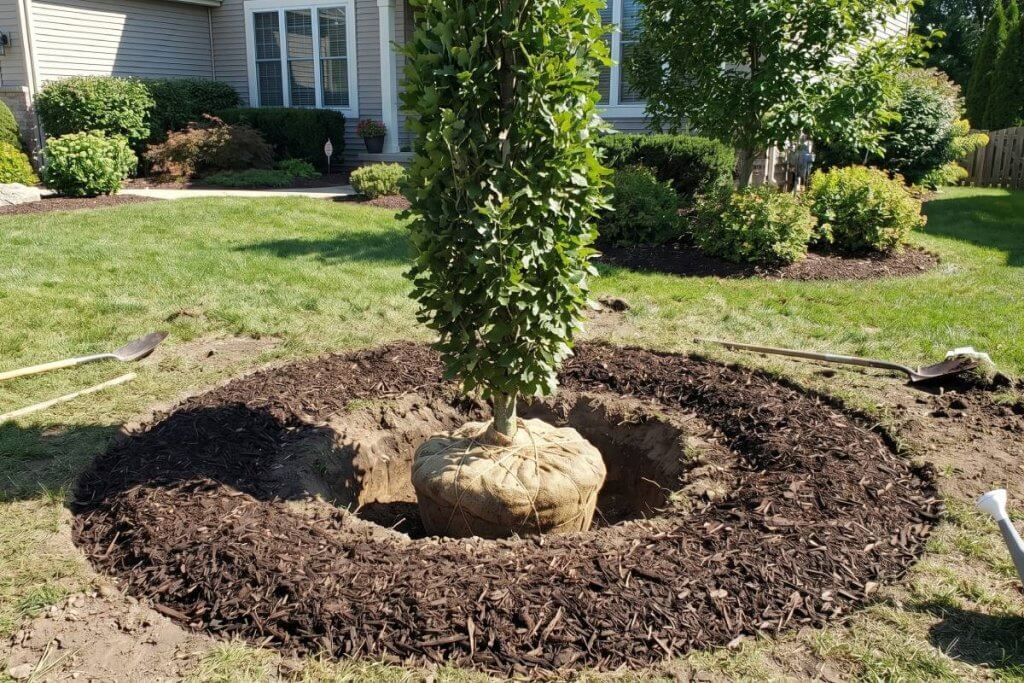
Planting time:
Spring or fall, while the ground is workable and before hard frost.
Hole preparation:
Dig at least 6 inches wider than the root ball and no deeper. Setting the tree too deep is one of the most common planting mistakes and causes long-term root stress.
Spacing:
Allow at least 6 feet from the base of each tree in a row planting. Tighter spacing creates competition for resources and restricts air circulation.
Mulch:
Apply 2 to 3 inches of mulch around the base. This keeps the soil from drying out during establishment and suppresses weeds. Keep mulch away from direct contact with the trunk.
Watering:
Water regularly through the first two growing seasons during drought periods. Once established, the tree tolerates dry conditions without intervention.
Pruning:
Prune only between November and March. Remove dead, broken, or crossing branches during this window. Do not make pruning cuts from April through October to avoid oak wilt exposure.
Light pruning after planting:
A light corrective prune at planting to remove broken branches from shipping and to improve form is acceptable, but keep it minimal.
Best Landscape Uses
Privacy hedgerow
Planted in a row 6 to 8 feet apart, Kindred Spirit Oaks create a dense vertical screen that delivers privacy without consuming the horizontal depth of a traditional hedge.
Driveway accent
The columnar form clears a driveway edge without overhead canopy interference at lower heights, and the tight silhouette does not overhang pavement as the tree matures.
Small residential lots
A single tree provides a formal vertical focal point and genuine shade within 10 years while leaving usable ground space on either side.
Narrow streetscapes
The urban pollution, salt, and clay soil tolerance make this tree a credible candidate for municipal planting strips where most trees fail.
Parking islands and median plantings
The tight footprint fits confined infrastructure plantings where spread is a physical constraint.
For larger lots where canopy width is an asset rather than a constraint, the Shumard Oak offers comparable fall color and wildlife value without the columnar growth restriction.
Conclusion
The Kindred Spirit Oak is one of the most legitimate solutions for bringing real oak character into a space-limited landscape. Its 10-to-15-foot spread, combined with oak-grade resilience and unmatched wildlife value, makes it a defensible choice for small yards, driveway lines, and urban corridors. The tradeoffs are height, strict pruning timing, acorn management, and an absolute full-sun requirement, and any buyer who ignores those will be disappointed.
FAQ
How fast does the Kindred Spirit Oak grow? Young Kindred Spirit Oaks typically grow 12 to 18 inches per year under average to good soil conditions with adequate sun and water. Growth slows once the tree matures and enters a more established phase, but the fast juvenile rate means meaningful height within three to five years of planting.
How wide does the Kindred Spirit Oak get? At maturity, the Kindred Spirit Oak spreads 10 to 15 feet wide. The canopy shape is tightly columnar, with the tree standing four to five times taller than it is wide. This narrow footprint is the defining advantage over standard oak species, which commonly spread 40 to 60 feet.
Can you keep Kindred Spirit Oak small by pruning? You can lightly shape it, but you cannot significantly reduce the size of a tree that is genetically programmed to reach 40 to 50 feet. Attempting to top or heavily reduce this tree disrupts its natural form and creates wound sites that attract the beetles that transmit oak wilt. Use it where its full mature height is acceptable.
Is Kindred Spirit Oak deer resistant? Kindred Spirit Oak is not considered deer-resistant. Like most oaks, young growth and foliage are attractive to deer. In areas with high deer pressure, protective fencing around newly planted specimens is recommended until the tree reaches a height where browse damage to the upper canopy is no longer a concern.