Why Most Oak Advice Is Wrong for Small Yards
Someone tells you to plant an oak. You buy a sapling, plant it six feet from your fence, and 20 years later, your neighbor is calling a lawyer. That scenario plays out constantly because most oak coverage lumps species like white oak (Quercus alba, 80+ feet) alongside genuinely compact varieties and never tells you the difference.
Urban trees produce significant annual value, with the USDA Forest Service calculating $18.3 billion per year in ecosystem benefits, including air pollution removal, building energy savings, and carbon sequestration attributable to urban tree canopy
Capturing those benefits in a small yard requires choosing the right species from the start, not the right genus.
What “Small” Actually Means: Height vs. Crown Spread vs. Roots
For a small yard, three measurements matter not one.
Mature height
The easy one. Under 40 feet keeps a tree proportionate on a standard residential lot and avoids most municipal height regulations for trees near structures.
Crown spread
where homeowners get surprised. A 35-foot-tall oak can still have a 40-foot-wide canopy, overhanging fences, shading neighboring gardens, and dumping acorns in gutters. Always check the width specification before buying, not just the height.
Root spread
The third factor, and it trips up everyone. Oak roots typically extend 2 to 3 times the canopy radius. A compact oak with a 20-foot canopy can still push roots 30 feet outward. Give any oak at least 10 to 15 feet of clearance from foundations, buried utilities, and hardscape.
The 6 Best Oak Trees for Small Yards
1. Dwarf Chinkapin Oak (Quercus prinoides)
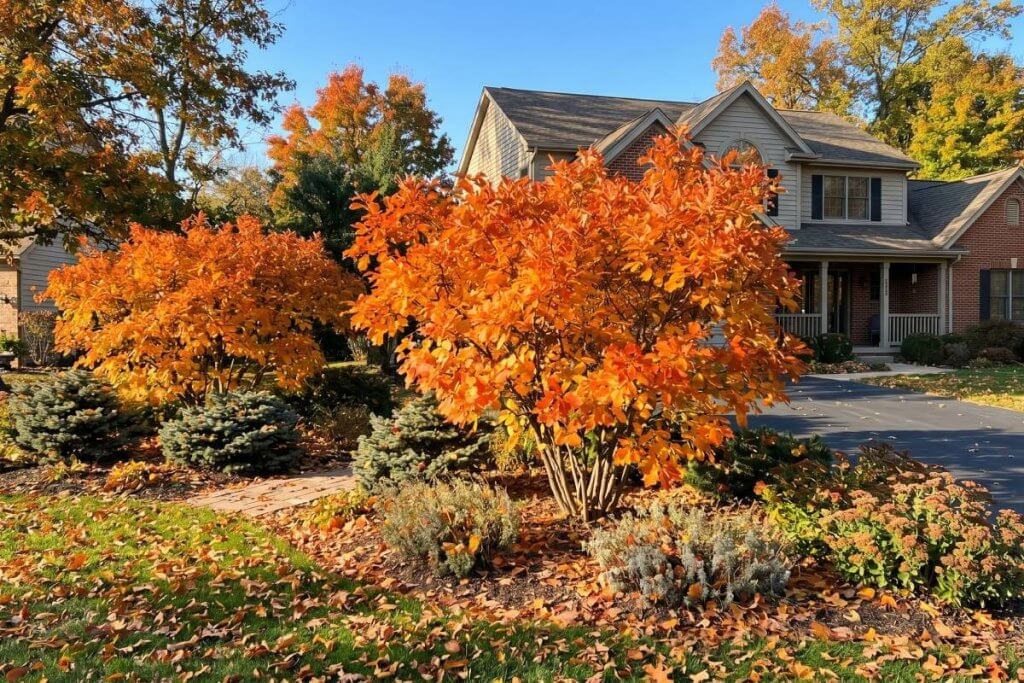
The dwarf chinkapin oak is a small shrub or tree that typically grows 2 to 10 feet tall, with a maximum around 18 feet, making it the most compact true oak available. It fits anywhere where white oak character is desired, but space is genuinely tight.
Unlike most Quercus species that take a decade or longer to reach sexual maturity, this small oak begins producing acorns within as few as 3 to 5 years, a significant advantage for homeowners who want wildlife value fast.
The naming is often a sticking point chinkapin and chinquapin oak refer to overlapping but distinct species, and buying the wrong one from a nursery is a common mistake worth avoiding before you commit to a planting plan.
The dense foliage of its broad, rounded crown turns a warm orange-brown in fall, and its rough-textured gray bark and quirky branch structure create a beautiful silhouette in winter. It thrives in full sun and tolerates poor, rocky, or acidic soils where most ornamentals fail.
Best for:
Postage-stamp lots, native gardens, corner specimens, yards under 3,000 sq ft. USDA Zones: 3–8
2. Gambel Oak (Quercus gambelii)
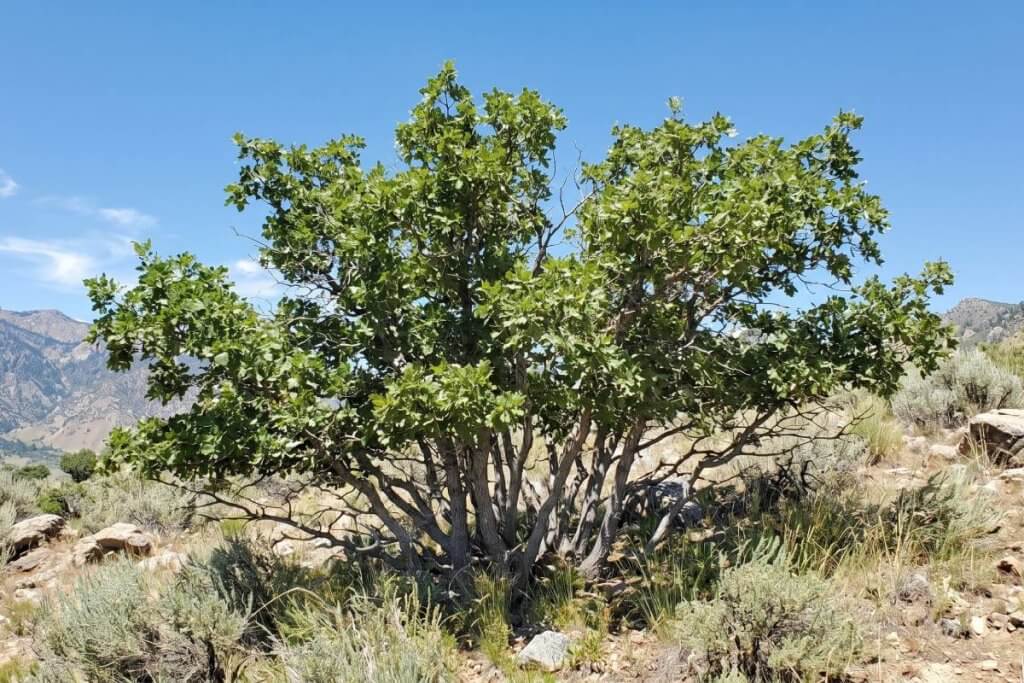
Gambel oak is the dominant small oak of the Rocky Mountain West, reaching 15 to 30 feet at maturity with a thicket-forming or single-trunk habit depending on site conditions. It handles drought, alkaline soils, and temperature extremes better than almost any other oak species.
The deeply lobed, classic oak leaf shape turns rich red and burgundy in fall. Because it spreads by underground rhizomes, it can self-naturalize useful for slope stabilization, but problematic if you want a single specimen. Prune suckers annually if a contained form is the goal.
Best for:
Western US gardens, drought-prone sites, naturalized slopes. USDA Zones: 4–8
3. Lacey Oak (Quercus laceyi)
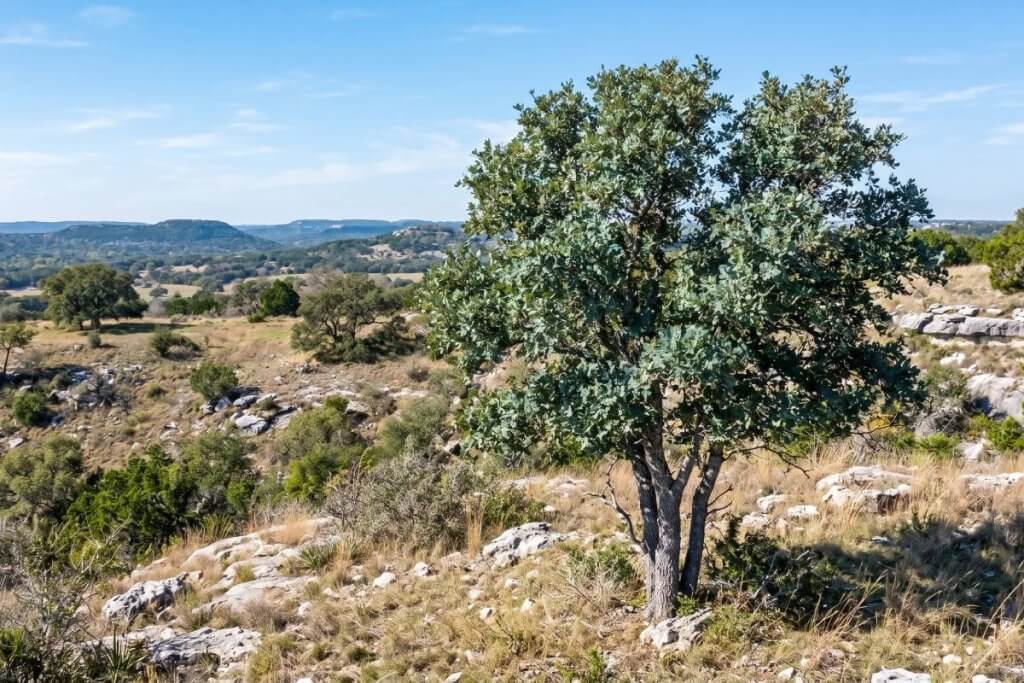
Lacey oak tops out at 20 to 35 feet with a rounded crown and is one of the few oaks that offers genuinely blue-green summer foliage, a striking contrast in any residential planting. It is native to the Texas Hill Country and northern Mexico, thriving on limestone-derived, alkaline soils where other trees struggle.
It handles both drought and heat load better than any comparable oak. Fall color ranges from rose-pink to soft orange, giving it year-round ornamental appeal. Lacey oak is semi-evergreen in mild winters, holding leaves well into December in USDA Zone 8.
Best for:
Texas, Oklahoma, and Southwest gardens; limestone or alkaline soils; yards that need year-round color. USDA Zones: 6–9
4. Bluejack Oak (Quercus incana)
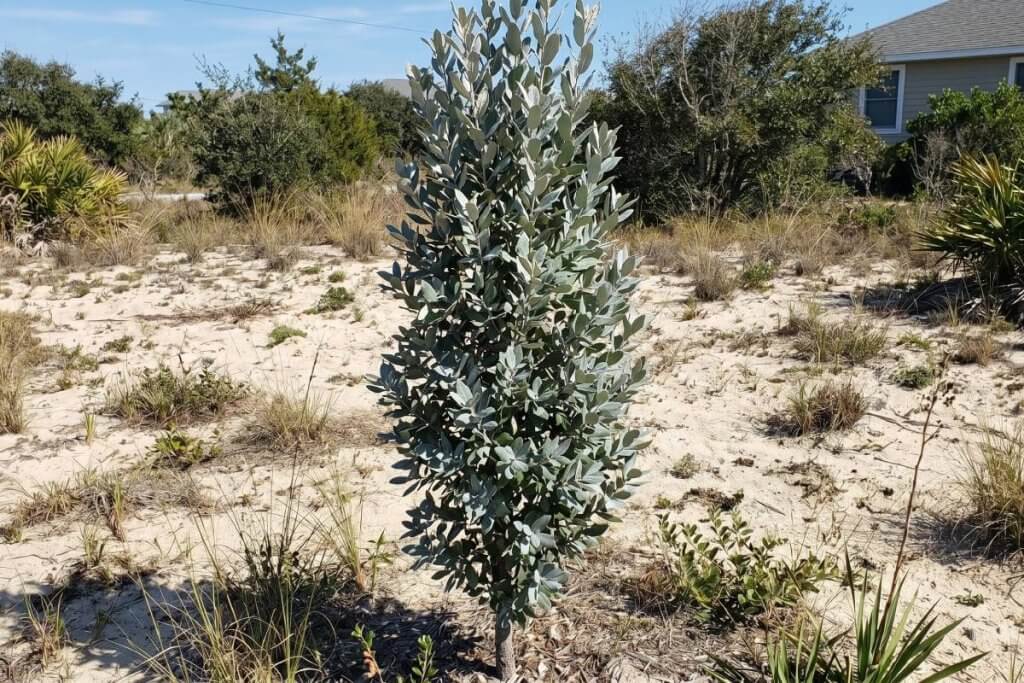
Bluejack oak reaches 15 to 30 feet and is the go-to choice for sandy, infertile soils in the Southeast where other oaks simply die. The narrow, willow-like leaves are silvery-blue on top and white-hairy underneath, giving the tree an almost tropical character in summer light.
It tolerates drought stress that would kill a live oak, and its small acorns feed cavity-nesting birds and small mammals through winter. Because it prefers poor soils, avoid enriching the planting hole. Bluejack oak actively performs worse in amended beds.
Best for:
Gulf Coast states, sandy soils, drought-stressed sites, and wildlife gardens. USDA Zones: 7–9
5. Arkansas Oak (Quercus arkansana)
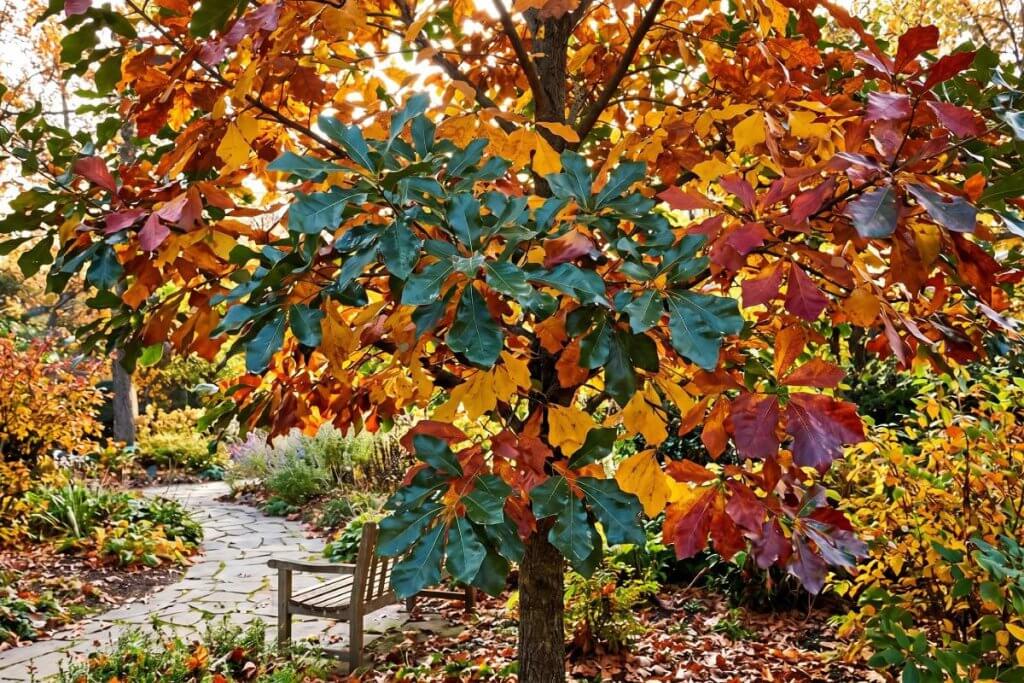
Arkansas oak is one of the least-known oaks in cultivation, but it deserves wider planting. It matures at 25 to 40 feet with a rounded crown and distinctively shaped leaves — broader at the tip with a spatula-like form, unlike any other oak species. It holds dark, glossy foliage through the growing season before shifting to deep red in fall.
It adapts to clay-heavy soils that reject most other oaks and tolerates partial shade, expanding its usefulness in yards with existing canopies. Population decline in the wild makes planting it in home landscapes a genuine conservation act.
Best for:
Clay soils, partial-shade yards, and conservation-minded gardeners in the South-Central US. USDA Zones: 6–9
6. Columnar English Oak (Quercus robur ‘Fastigiata’)
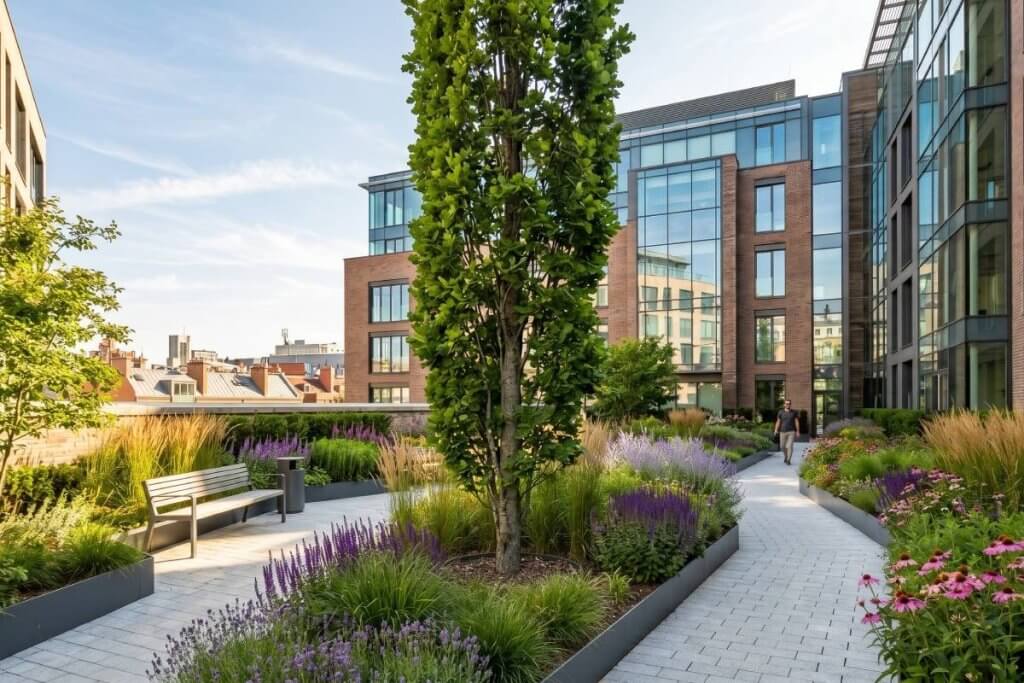
This is the exception to every rule about oak width. ‘Fastigiata’ grows 40 to 60 feet tall but only 10 to 15 feet wide, a vertical exclamation point rather than a spreading canopy. For narrow side yards, tight urban lots, or privacy screening applications, no other oak comes close.
It carries all the ecological value of English oak, including acorn production and structural insect habitat, in a fraction of the horizontal footprint. Root spread is still proportional to trunk diameter, so maintain a 10-foot clearance from foundations regardless of the narrow canopy.
Best for:
Urban lots, narrow side yards, privacy screens, yards needing vertical structure without canopy spread. USDA Zones: 4–8
Comparison Table: Key Specs at a Glance
| Species | Mature Height | Crown Spread | USDA Zones | Soil Preference | Best Region |
| Dwarf Chinkapin Oak (Q. prinoides) | 10–18 ft | 10–20 ft | 3–8 | Sandy, rocky, acidic | East / Midwest |
| Gambel Oak (Q. gambelii) | 15–30 ft | 15–25 ft | 4–8 | Rocky, alkaline, dry | Rocky Mountain West |
| Lacey Oak (Q. laceyi) | 20–35 ft | 20–30 ft | 6–9 | Limestone, alkaline | Texas / Southwest |
| Bluejack Oak (Q. incana) | 15–30 ft | 10–20 ft | 7–9 | Sandy, infertile | Southeast / Gulf Coast |
| Arkansas Oak (Q. arkansana) | 25–40 ft | 25–35 ft | 6–9 | Clay, partial shade | South-Central US |
| Columnar English Oak (Q. robur ‘Fastigiata’) | 40–60 ft | 10–15 ft | 4–8 | Adaptable | Northeast / Pacific NW / UK |
How to Choose the Right One for Your Yard
Start with your USDA hardiness zone and eliminate any species outside that range immediately. No amount of microclimate management will save a Zone 9 Lacey oak planted in Minnesota.
Next, test your soil. A basic pH kit from any garden center costs under $10 and tells you whether you need an acid-tolerant species like Dwarf Chinkapin or an alkaline-adapted one like Lacey or Gambel oak. Planting against soil chemistry is the single fastest way to kill an oak.
Finally, measure your actual available space, not what you think you have. Walk your lot boundary, note setbacks from the house, fence, and any buried infrastructure, and compare the crown spread column in the table above. If you are in doubt between two species, always choose the smaller one. An oak planted correctly in a tight spot will outlast you. One wrong planted will cost your heirs.
Compact varieties represent only one segment of the wider range of oak species suited to residential yards, and homeowners with more space have a significantly broader shortlist to work from.
Planting and Care Basics
Timing
Plant in fall or early spring when the tree is dormant. Fall planting gives roots a full cool-season establishment window before summer heat arrives.
Depth
The root flare, where the trunk base widens, must sit at or slightly above the finished soil grade. Burying the flare is the leading cause of slow decline in young oaks. It is not recoverable once the damage is done.
Watering in year one
Water deeply once a week for the first full growing season. Deep and infrequent beats shallow and daily every time. After the first full year, most of these species require no supplemental irrigation except during exceptional drought.
Mulch
Apply a 3-inch layer of wood chip mulch in a ring extending to the drip line of the canopy. Keep mulch pulled 3 inches away from the trunk. Mulch-on-trunk creates the same rot conditions as planting too deep.
Fertilizer
Do not fertilize newly planted oaks. Native oaks in particular perform better in lean soil. Excess nitrogen produces fast, weak growth that is more susceptible to pests and storm damage.
Establishment-year watering and mulching cover the first 12 months, but long-term tree maintenance, including structural pruning in years two through five, determines whether a compact oak develops a sound form or a liability.
Conclusion
Oaks belong in small yards. The key is selecting species that were never meant to grow to 80 feet. The six varieties covered here, from the shrubby Dwarf Chinkapin to the vertical ‘Fastigiata’, deliver authentic oak ecology, wildlife value, and long-term structure at a scale that fits real residential lots. Match your species to your zone and your soil, plant it at the correct depth, and you will have a tree that outlasts the house.